Ireland
Where Ireland stands on this
Five things are true at once.
The technology is real and residential. The evidence is first-party manufacturer material describing completed installations and current products.
Underground waste systems are already installed in Ireland. Irish companies supply, install and commission them, and will advise from the pre-planning stage. This is real Irish capability, working today.
The Irish systems are not the system in this Discovery. The ones we verified are built around dedicated underground containers — 300 litres up to five cubic metres — serving apartment blocks, housing developments, schools and town centres. One does use a hydraulic lift, and it raises 1,100-litre communal containers, not a household’s own bins. We have not verified an Irish supplier of the domestic version, nor a single private house in Ireland with an underground installation.
No verified Irish domestic installed price exists. We have not found one, so we do not publish one. Excavation, ground conditions, drainage, power and commissioning are all site-specific, and a figure quoted without a site visit would be a guess.
A site-specific planning check is required. An excavated, powered installation is not the same planning question as a store standing on the ground, and it cannot be answered in general.
Underground is not new to Ireland. This version of it — your own bins, going down and coming back — is what has not been established here, and that is a gap in what we have verified rather than a verdict on what is possible.
Your Options
Your three options
Three ways to stop the bins being the first thing anyone sees.
-
Hide
What changes
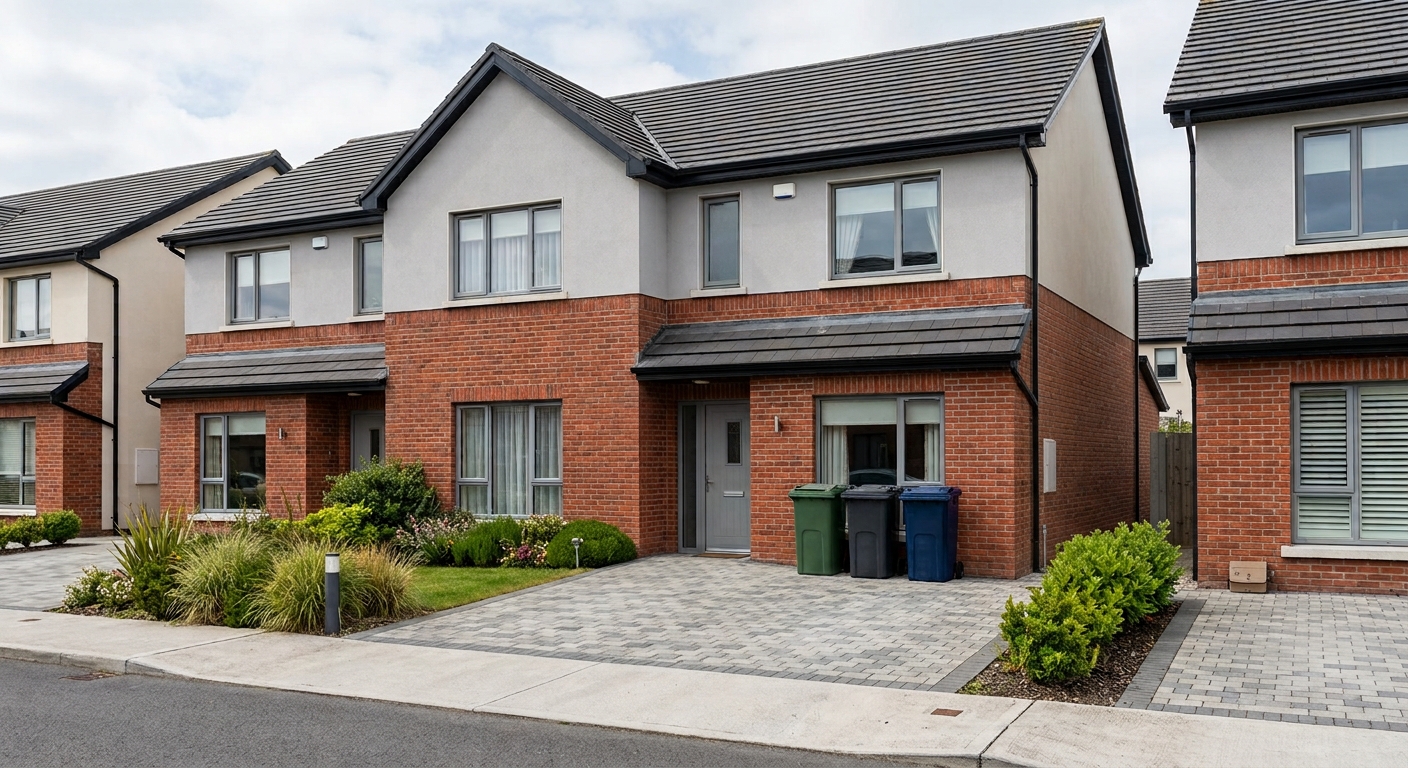
You see a finished unit instead of three bins. The bins stay where they are.
What it takes
Delivered, and often assembled at the property.
Available in Ireland
Yes. The most widely available of the three.
Planning
Class 62 may provide an exempted route, subject to conditions.
Indicative cost
Low hundreds through several hundred euro.
-
Integrate
What changes
The storage becomes part of the frontage: a run that continues a boundary, a planted roof, a finish chosen against the house.
What it takes
Made to order. Several Irish makers will quote for a custom size.
Available in Ireland
Yes, from several Irish makers.
Planning
Class 62 may provide an exempted route, subject to conditions.
Indicative cost
Several hundred euro. Designed and multifunctional options reach €1,000 and above.
-
Disappear
What changes
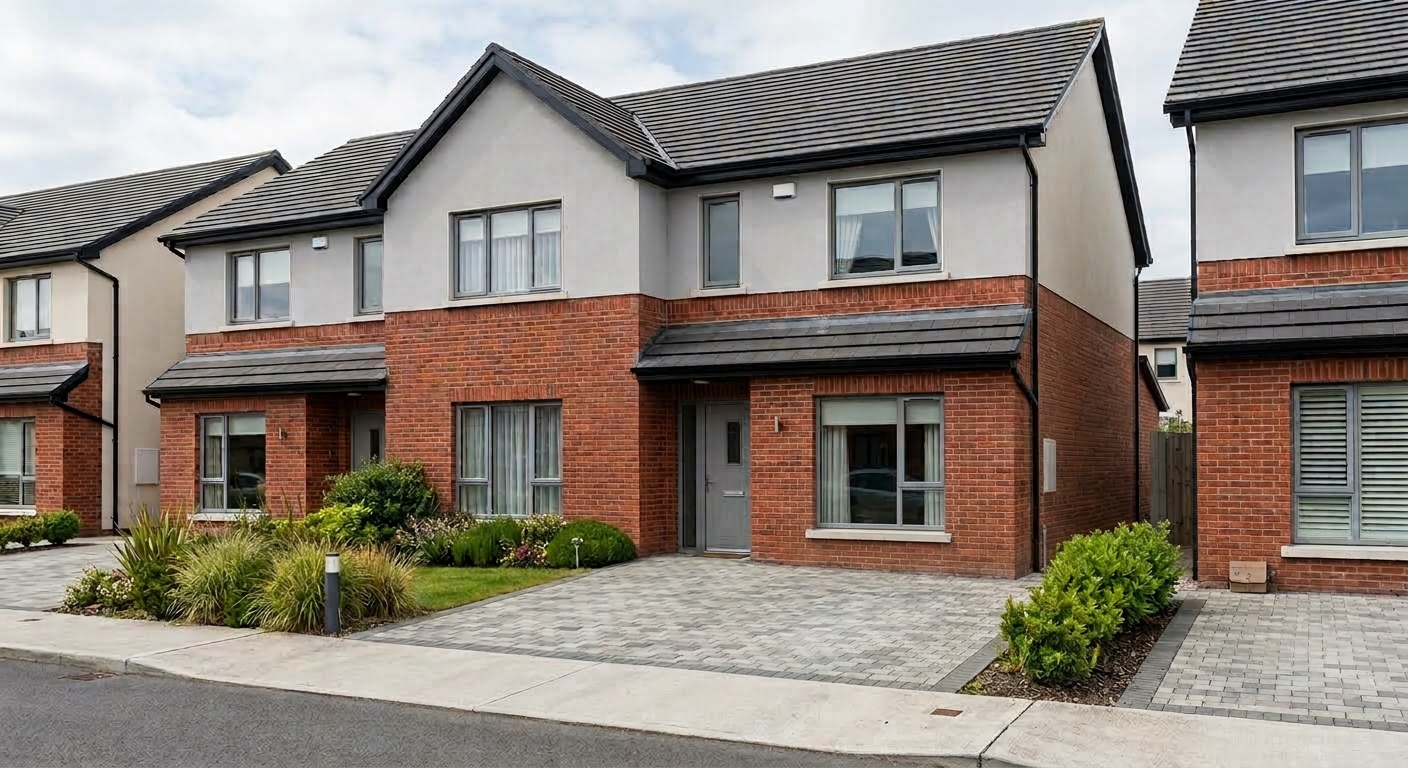
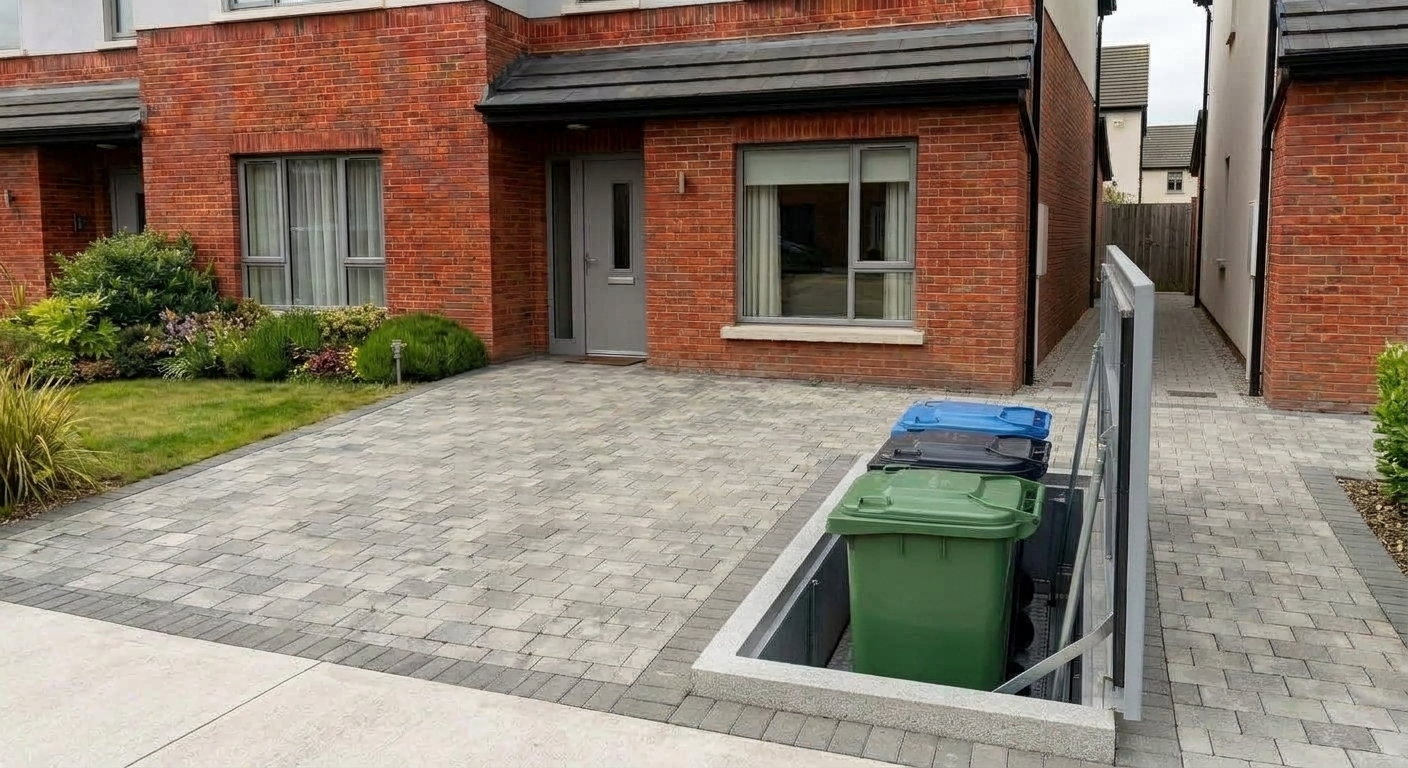
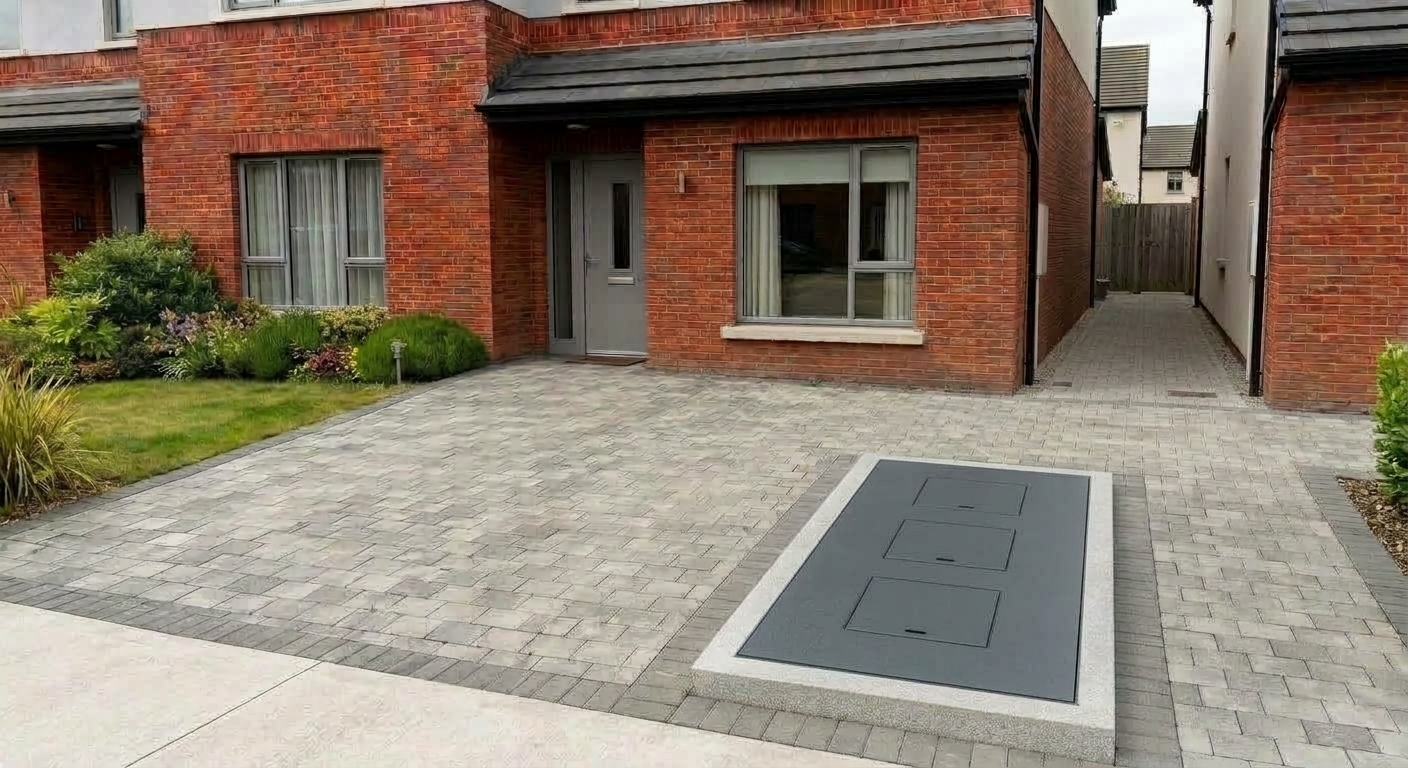
The ground the bins stood on becomes ground again. The bins go below it.
What it takes
Excavation, a power supply and a planning check.
Available in Ireland
Not for an individual house. No Irish supplier verified.
Planning
Not answered by Class 62. A site-specific check is required.
Indicative cost
Quote required.
No verified Irish domestic installed price. Manufacturer pricing is by quotation, with site works additional.
Which one is right depends on the property, the budget, the space, and how much work you are willing to take on.
Planning
A planning change worth knowing about
From 27 July 2026, Class 62 of S.I. 341/2026 provides an exempted-development route for a structure within the curtilage of a house for bicycle or bin storage, subject to conditions: a maximum area of 3.5 m², a maximum height of 1.4 m and, where the structure is placed to the front, a 0.6 m setback from the front wall and no reduction of the open front garden by more than half.
This covers above-ground storage only. It does not extend to an excavated, powered underground system, which remains a separate, site-specific question that Class 62 does not answer.
Conditions attach to your own property. Check the ones that apply before you buy or build.
Questions
The practical questions
Are these ordinary wheelie bins?
Yes. The British residential system is described by its manufacturer as taking two or three residential wheelie bins. The German domestic unit carries four 240-litre bins, the standard domestic size. The same manufacturer’s 660 and 1,100-litre version is for apartment blocks and commercial premises, not a house. Be careful with product names. Underground systems sold in Ireland are sometimes described as wheelie bin systems, and they are genuine underground systems — but the container they lift is a dedicated 800 or 1,100-litre one, not the bin outside your door. This Discovery is about your own ordinary bins.
What about planning for an above-ground bin store?
Class 62 of S.I. 341/2026 has provided an exempted-development route since 27 July 2026, subject to conditions covering area, height, front setback and open front garden. Those are the principal conditions, not all of them, and they have to be checked against your own property.
What happens on collection day?
The platform raises the bins to standing height and you wheel them out as you do now. The system removes them from view between collections; it does not change the collection.
What happens if the power goes?
We do not have a first-party answer covering every system, so we are not going to invent one. Ask about manual override and back-up arrangements, in writing, before committing.
What about drainage and groundwater?
One manufacturer specifies an open-bottomed container so rainwater drains away. Beyond that, the water table, ground conditions and existing drainage are site-specific and would need assessing.
Can I park or drive over it?
Sometimes — but it depends entirely on the system, and it is not something to assume. The British residential system described above has a recessed top that can be finished in stone, slabs or artificial grass, and its manufacturer states that a car can be parked or a patio laid directly over the stored bins. That is a claim about that product, not about underground bin storage in general. Ask the manufacturer directly, in writing, before planning to drive or park over the cover.
What safety systems are provided?
That depends on the system, and we will not generalise. What we can say first-party: the British residential installation uses safety edges intended to prevent trapping injuries as the bins descend. That is a feature of that system, not a guarantee about any other. Ask what is fitted, in writing.
What about maintenance and emergency operation?
Not established by the evidence we hold. Ask about service intervals, response times, and how the system is operated if it fails.
Does a bin store need a concrete base?
Generally no. One Irish maker states plainly that a concrete base is not required but a firm, level surface is — on grass, gravel or uneven paving, doors and lids may not align. That advice is consistent across suppliers.
Looking Ahead
Looking Ahead
Everything future-facing on this page is in this section and nowhere else.
Everything described above as available in Ireland can be arranged today. One thing on this page is not: an individual-home system that takes your own ordinary wheelie bins below ground and raises them back. That is a gap in what we have verified, not a verdict on what is possible.
The technology exists internationally, as manufactured residential equipment.
PlotNua has not found a standard domestic underground-bin offer in Ireland.
If that changes, the opportunity changes too.
Evidence
The evidence behind this
Residential proof — ordinary domestic bins
EdmoLift UK — Kensington underground bin storage, Britain. A residential installation. The manufacturer describes units sized “for two or three residential wheelie bins”, hydraulic and push-button operated, enclosed in perforated sheet-clad steel and fitted with “safety edges to prevent trapping injuries as the bins descend”. The recessed top can be finished in “stone, slabs, or Astro-turf”, “allowing a car to be parked or a patio to be laid directly over the stored bins”.
Sieglift GmbH — BinUp, Germany. An underground lift. The domestic-relevant configuration takes a platform sized for four 240-litre bins, in a steel foundation container with an open bottom so rainwater drains away, electro-hydraulic, on a 220 V supply, with a 700 kg platform payload. The manufacturer notes a low, step-free filling height suitable for children, wheelchair users and older people.
These payload figures are platform lifting capacities for the bins. They are not surface load ratings and say nothing about what the ground above can carry.
Adjacent mechanism — not domestic bins
Sieglift GmbH — SemiUp, Germany. This system carries 660 or 1,100-litre containers only. It is not a domestic wheelie bin, and nothing on this page presents it as one. It is included because it evidences the shallow-excavation approach: installed 60 cm deep in utility-line-free soil, on a galvanised steel foundation with an integrated lift platform, a travelling galvanised cover that locks automatically as it closes, a 500 kg capacity and a 230 V supply. Its 60 cm depth is a figure for that system and does not transfer to a domestic installation.
Elkoplast, Czech Republic. Dedicated underground containers at 3, 4 and 5 cubic metres, each on a 1,600 × 1,600 mm platform inside a waterproof concrete silo, made to EN 13071. Included for one reason: the same manufacturer’s SemiQ bin unit does take an ordinary 240-litre wheeled bin — and that version is above ground. Capacity and mechanism travel together. No Irish distribution is claimed by this source.
Underground systems in Ireland
MES Ireland Ltd, Durrow, Co. Laois. Supplies, delivers, installs and commissions underground waste systems in Ireland, and offers assistance from the pre-planning stage. Three ranges: Mol, a 5 m³ container with card-controlled deposit columns; Silobin, a deep-collection container installed 1.75 m down and backfilled with soil and gravel; and SCT, a hydraulic lifting system for 800 or 1,100-litre rear-loading containers. Verified first-party, September 2026.
Waste Solutions, Mountrath, Co. Laois. Supplies the Bauer GeoTainer and Molok underground ranges and states that it provides professional installation. Its published settings are housing and apartment complexes, schools, urban waste collection, parks and city areas, and its containers are emptied by crane. The Molok M300 is a dedicated 300-litre underground container, not a domestic wheelie bin. Verified first-party, September 2026.
What this proves, and what it does not. It proves that underground waste systems are supplied and installed in Ireland, by Irish companies, today. It does not prove that the system in this Discovery is available here. Every verified Irish installation is built around dedicated containers serving many households, and no single private house in Ireland with an underground installation has been verified. Where a supplier offers a single installation, that means one collection point, not one house.
The Irish retail market for bin stores
Prices and dimensions were verified first-party in September 2026 across Timbertrove, Sheds Direct Ireland, Binstore.ie / CSH Furniture, In The Market and Woodie’s. Binstore.ie and CSH Furniture trade from the same address and company and are counted once. Several suppliers run continuous promotions, so their sale prices are not market prices and are not used as such here. This tier is above-ground storage only.
Irish planning
Class 62 was inserted after Class 61 in Part 1, Schedule 2 of the Planning and Development Regulations 2001 by S.I. No. 341/2026, which came into operation on 27 July 2026. Verified against the Irish Statute Book. The instrument contains no reference to underground, excavated, below-ground, basement, lift or powered installations of any kind. It applies to above-ground structures, and silence is not exemption.
What this evidence does not establish
No verified Irish domestic installed price, and no published Irish price for any underground system. No single private house in Ireland with an underground installation. No Irish supplier of a powered platform for a household’s own ordinary wheelie bins. No domestic footprint, excavation depth or clearance figure. No vehicle-loading rating for any system other than the British one quoted above. Nothing about depositing waste while the bins remain below ground. Where the evidence is silent, this page says so rather than filling the gap.