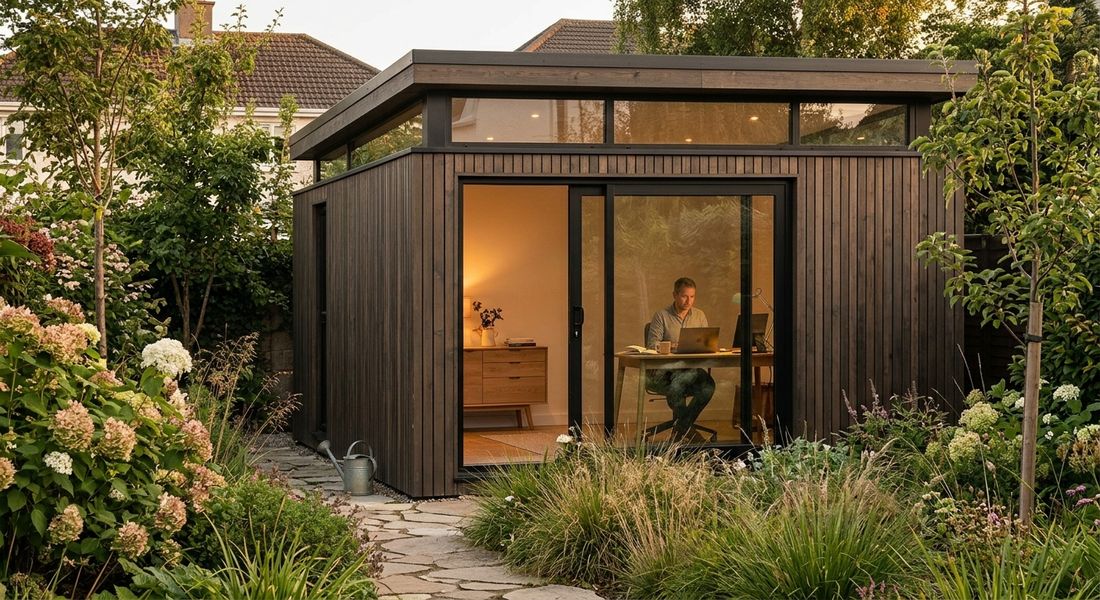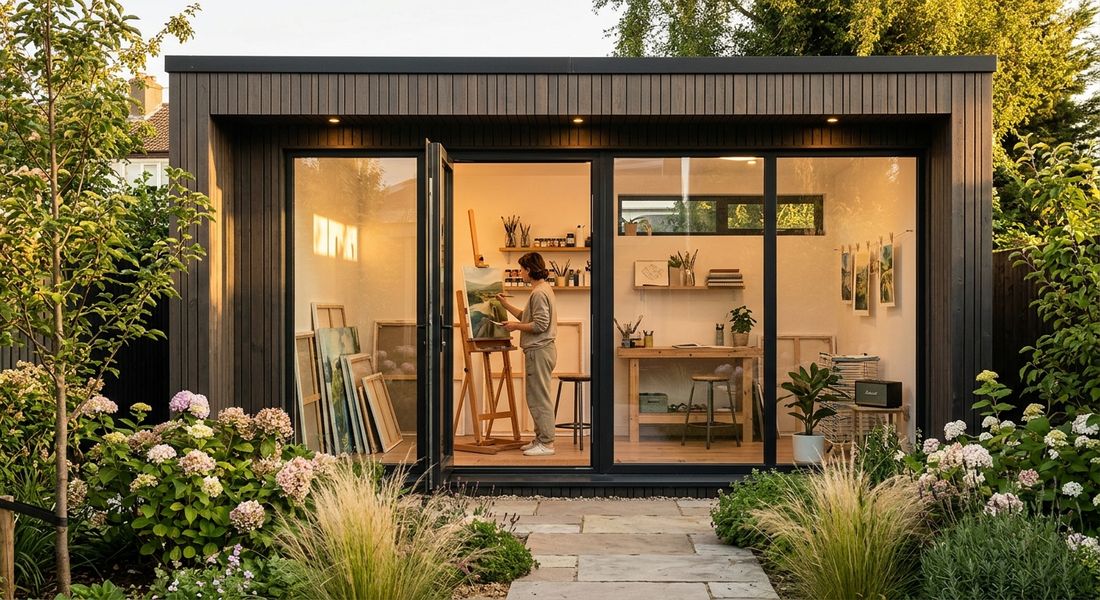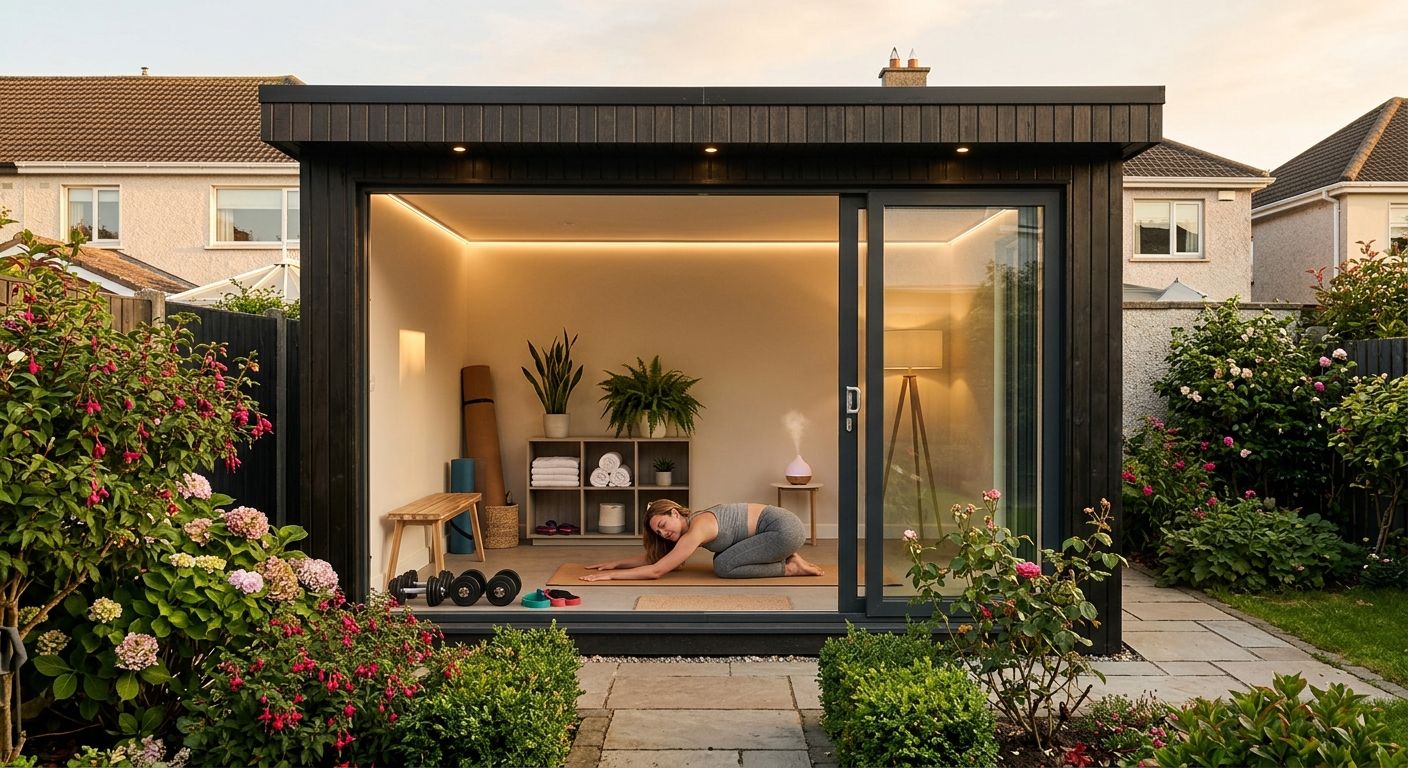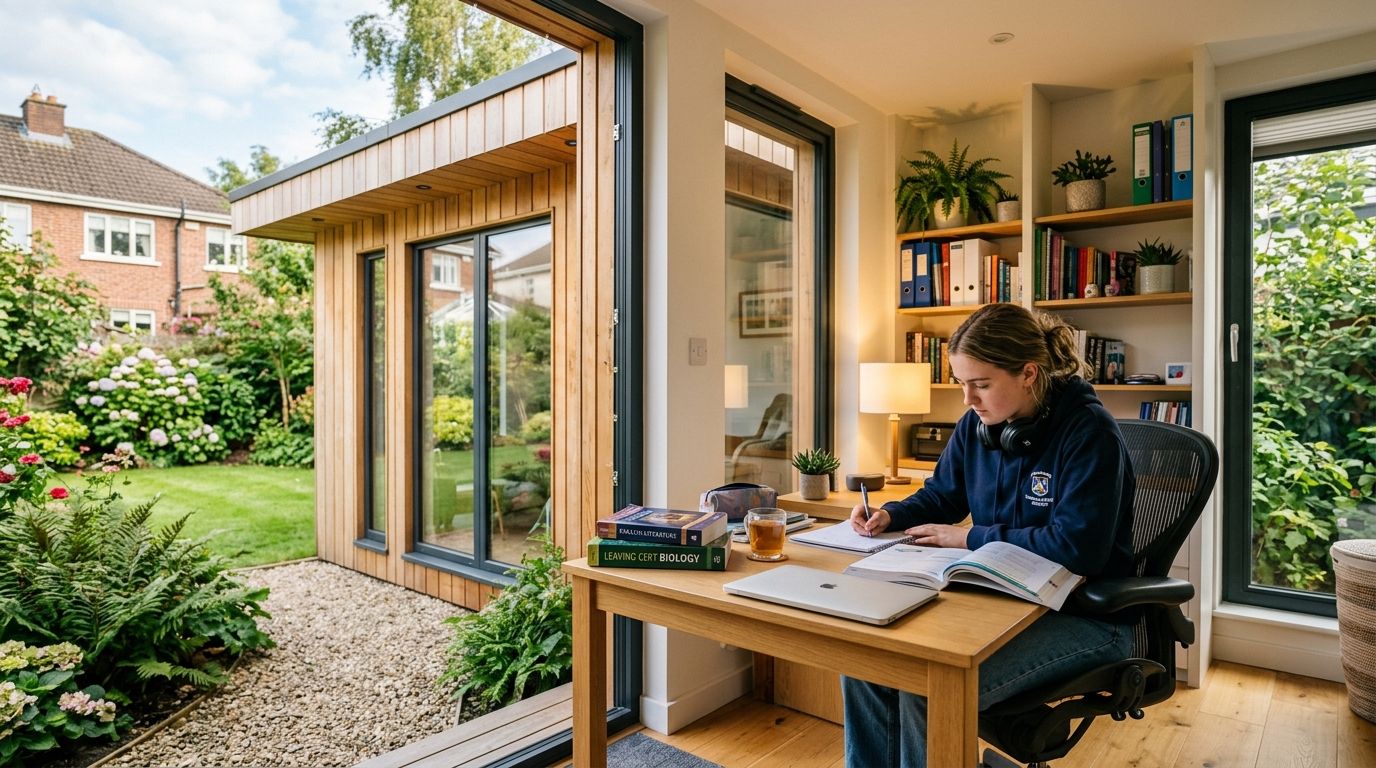
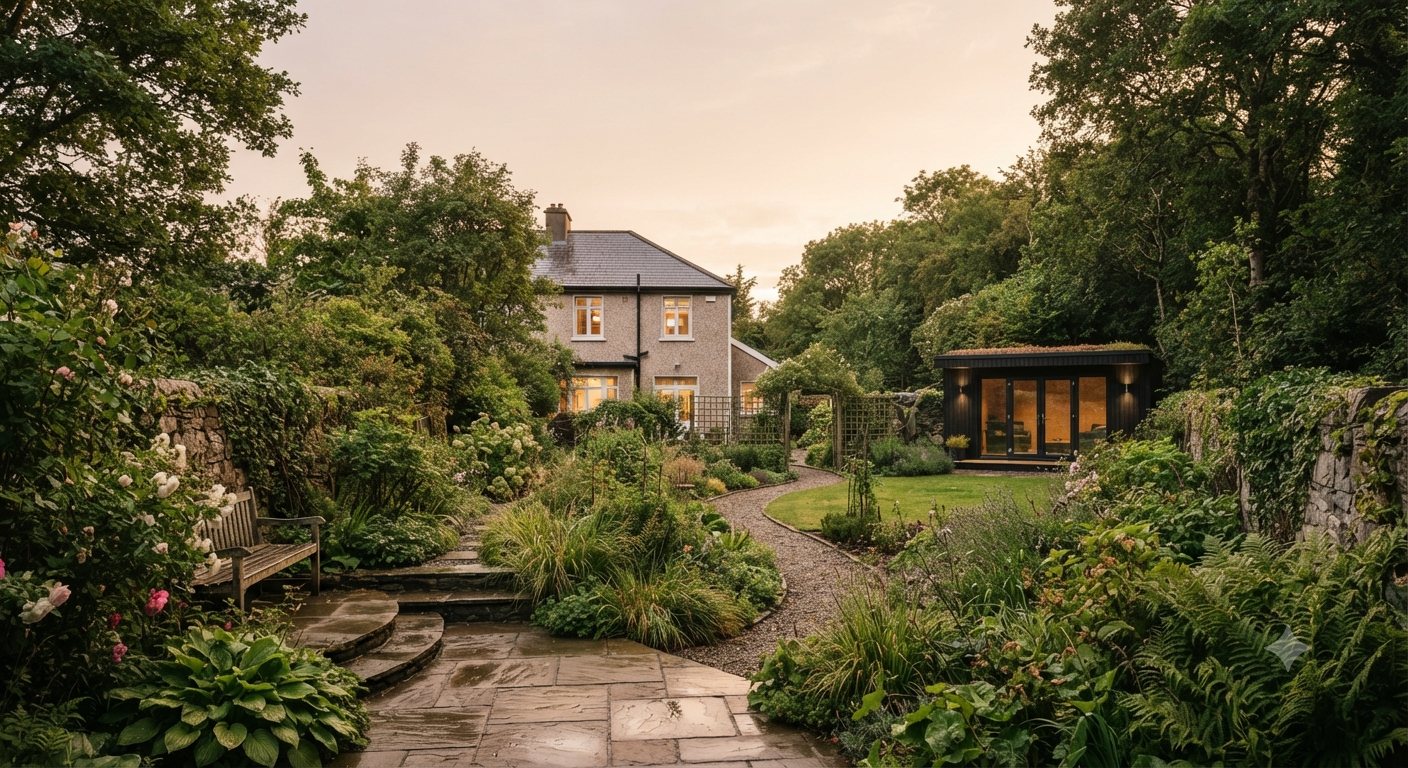
There are three ways to get another room. Extend the house, convert the attic or
the garage, or build one in the garden.
This page is about adding a room in the garden. If you are still deciding how to
create the space — or need somewhere for somebody to live — the two
options below will take you to the right Discovery.
Still deciding which way to go?
Four Ways to Get More Space compares extending, converting and building, and helps you work
out which suits your house.
Since 27 July 2026 you can build up to 30 m²
in your back garden with no planning application at all. 30 m² is about
5 m × 6 m. The limit before that was 25 m².
Up to 30 m². Sheds, garages and greenhouses already in the
garden count towards it, so measure what is out there first. A 12 m² shed
leaves you 18 m². If somebody might live in the garden one day, size this
building carefully — a home in the garden has its own allowance, and what
you build now counts against it.
Up to 4 m high with a tiled or slated pitched roof. 3 m for any
other roof.
Behind the front of the house. Back garden or side.
Keep 25 m² of garden. That much open space stays at the
back or side.
Match the house if it goes to the side. Behind the house it
does not matter.
These are the conditions in the
2026 exempted development
regulations. Whether your own garden meets all of them depends on its size,
shape and what is already built on it.
Other Requirements
What else applies?
Planning is one part. These are the others, and what each one means for a garden
room.
Building Regulations
Usually relevant. They are separate from planning, and
being exempt from one does not exempt you from the other.
They set how the building is put together: structure, insulation,
ventilation and electrical work. Which parts apply depends on the size, the
construction and the use.
What to do: nothing yet. PlotNua gathers what each supplier
states about how their buildings are built, and shows it beside the price.
Building Regulations —
gov.ie
Building Control
Depends on the project. This is the local authority side:
notices, inspection and certification.
Whether a commencement notice is needed is not the same for every garden
room. The answer depends on the room’s size, construction and intended
use.
What to do: one call to your local authority's Building
Control section settles it before you order.
Building Control —
gov.ie
Fire safety
Worth checking on every build. Three things affect it: how
close the room sits to the house and the boundary, what it is made of, and
how you get out of it.
Use matters too. A room with a stove or a kiln is not an empty study.
Only if your house is on the list. Every local authority
keeps a Record of Protected Structures, and where a house is on it, exempted
development rights can be restricted in the grounds as well as the house.
Only if your address is inside one. These are designated in
the county or city development plan, and extra controls can apply to how a
structure looks and where it sits.
A room behind the house is less likely to be affected than one visible from
the road. That is the council's judgement rather than ours.
What to do: the development plan lists them, and the
planning office will confirm your address in one call.
Cost
What does it cost?
Three broad levels, taken from garden rooms the PlotNua currently
holds a published price for.
From about €3,600
Basic or seasonal
A timber garden building, lightly insulated or not insulated. Comfortable in
spring and autumn, cold in January.
For example: Gardenhouse24 Monaco 28 at
€3,624, MCD Garden Sheds Apex Cabin at €5,469.
About €8,000 to €18,000
Insulated, year-round
The largest group by far. Insulated walls, floor and roof, double glazing and
a finished interior you can work in all year.
For example: Sprout Pod 6m at €10,250,
Adman Multiroom 3m × 5.2m at €12,450, SIPS Garden Room POPPY at
€12,750.
€18,000 and above
Larger or higher specification
More floor area, more glazing, better heating, higher internal finish. The
dearest garden room in the Atlas is €67,950.
For example: Iglucraft Igluoffice 2 at
€48,000, Concept Modular Cabin 25m² at €49,750.
Usually extra: the base, delivery, installation,
electricity, heating and any groundworks. PlotNua records what each published price
covers, so two prices are compared on the same terms.
Two things the Atlas is still gathering.
Suppliers do not consistently publish whether VAT is included, or the floor area. So
these are price bands with real examples rather than a price per square metre.
PlotNua is collecting both, and the bands will sharpen as it
does. Indicative prices reviewed in August 2026.
Your Property
Would this work on your property?
Getting to it. Side access makes the build simpler. If the only
way in is through the house, that changes how it is built.
Power and heating. Easier to plan at the start than to add
later.
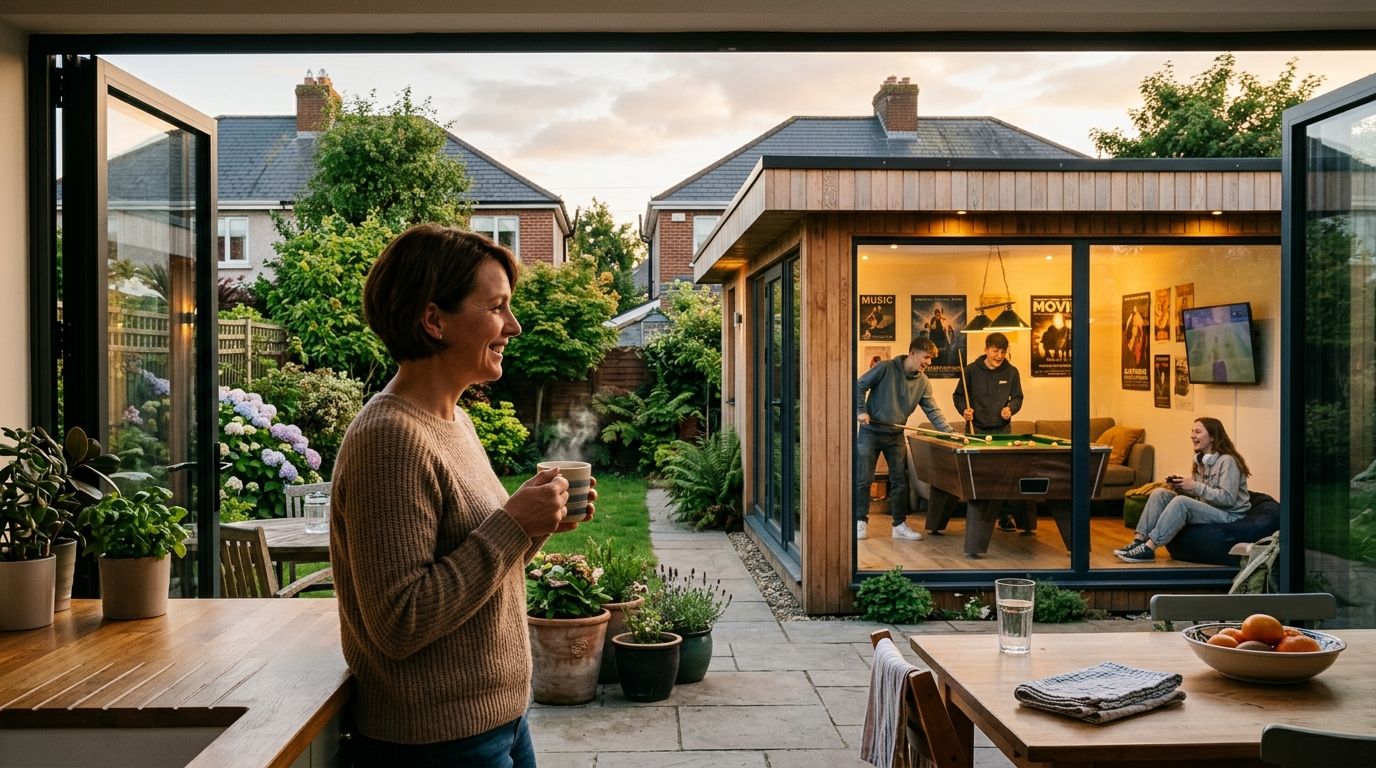
The teenagers get their own space, and the family gets the house back.
Frequently Asked Questions
Common questions.
How long does it take?
A single room is one of the quicker home projects — often
a matter of weeks, depending on the design and how easy the garden is to get
into.
Can someone sleep in it?
Not under these rules. A separate rule covers a one-bedroom home
in the garden, with its own size and conditions —
Build a Home in Your Garden.
Can I work from it?
Your own work, yes. Teaching, clients or a business may need
permission depending on how much of it there is. Ring the council first.
Will it add value?
That depends on the house and the area, and we would rather say
so than make up a figure. A well-insulated room that suits more than one use
holds its value best.
PlotNua
Let’s start with your plot
Answer a few questions about your property and we’ll show
you what would fit, what it costs and who supplies it.
What you do
Enter your Eircode and answer three short questions: the style you like,
where it should be made, and your budget.
What we do
We check suitable products and suppliers available to Ireland and compare them
with the property information supplied.
What you get
Buildings that may fit, suppliers who deliver, indicative prices, the relevant
planning position and practical next steps.
Recommendations cannot be bought, and payment never determines who appears or ranks more highly.
The Atlas is our record of what is actually available: the products, the suppliers,
the prices, the sizes, the specifications, whether something can be delivered here,
and where each piece of information came from.
It keeps growing as new products, suppliers, prices and availability information
are added from Ireland and across Europe.
Every Discovery is written from that research and updated as the Atlas grows.