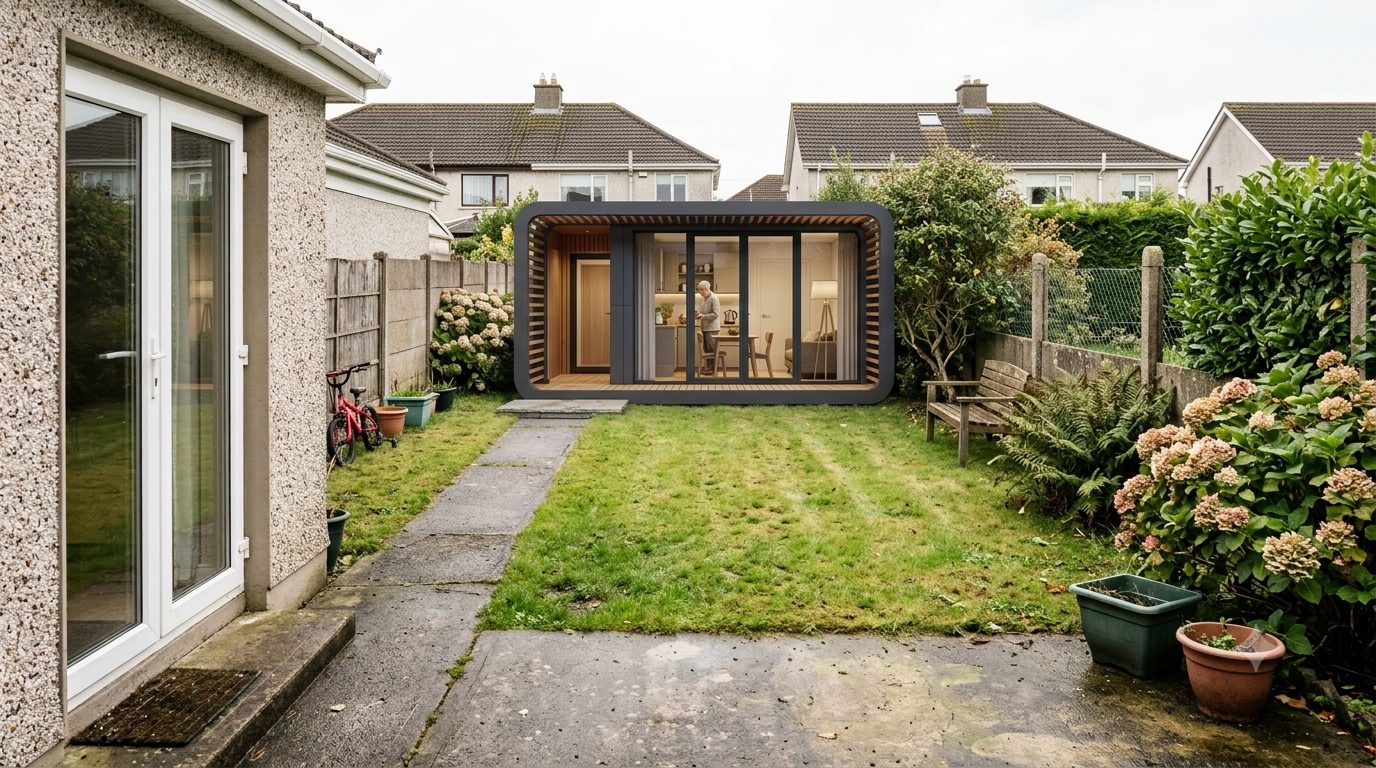
Making the work is rarely an artist’s hardest problem. What happens to it afterwards is: where it lives, and who ever sees it.
A wall you walk past. A spare room. A dry corner nothing is in.
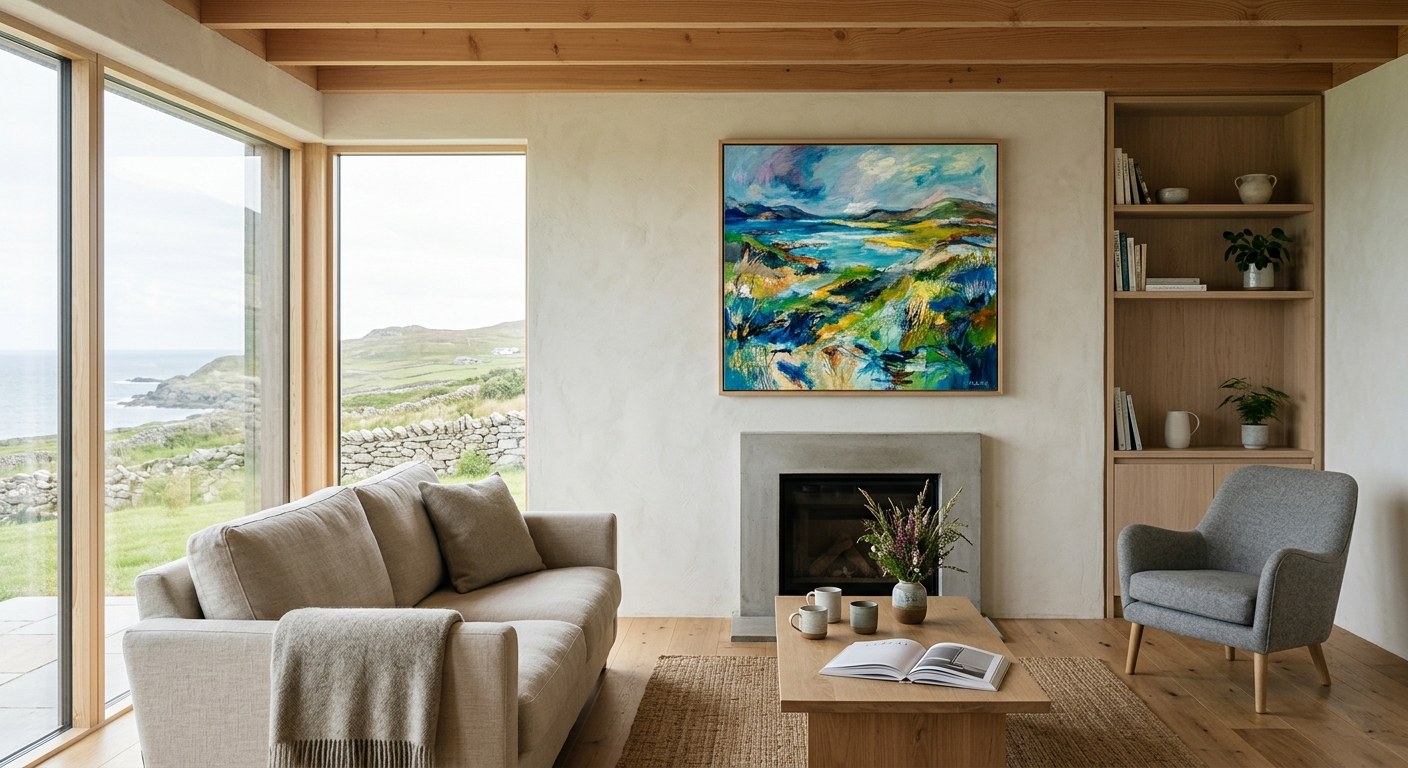
Finished work. Made, framed, and stacked against a studio wall.
- Somewhere to keep it. Somewhere to hang it. Somewhere to photograph it. Somewhere it might eventually find a buyer. Not all of those need the same thing from you.
Nobody has to come to your door. You can take part without a single visitor entering your home, and you can change your mind between one arrangement and the next.
- Store Finished work kept safely in space you are not using. Nobody sees it. Somewhere dry, out of the way, and agreed in advance — which to an artist with a small studio is worth more than it sounds.
- Display Selected work hangs where you live, and you live with it. It can also be photographed there, and work seen in a real room reads differently from work on a studio wall. Still no visitors.
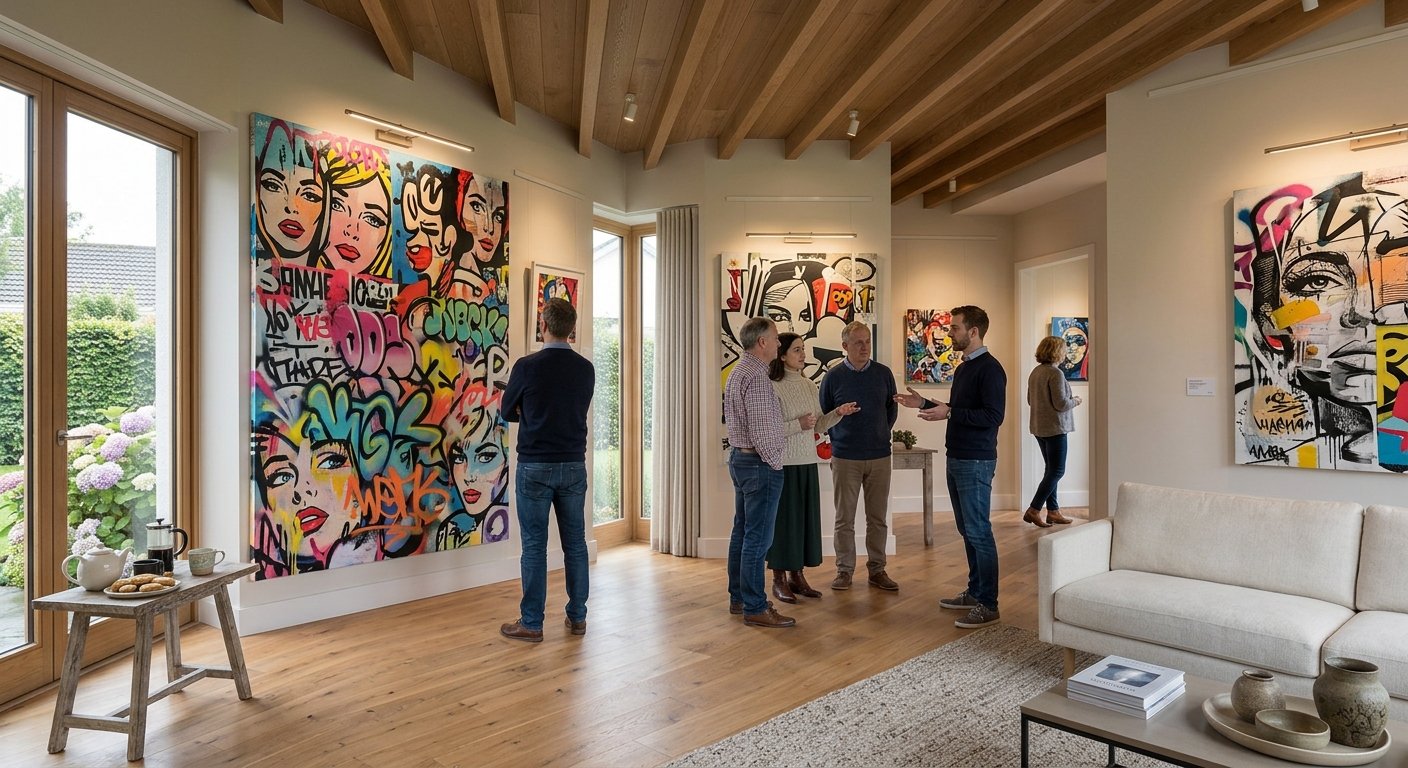
- Open You choose to let somebody in. One viewing, a few people, or an occasional short exhibition. The only rung that puts anybody on your doorstep, and the only one you can skip.
- Help sell You help the work find somebody. Share the artist’s link, offer the photographs, mention it to somebody who would want it. The artist stays the seller.
The more involved you choose to become, the greater the potential return may be — and the more there is to agree. You could be paid for providing the space. If a work sells, you and the artist could agree that you receive a share. Neither is a rate: every arrangement is settled between two people, in advance.
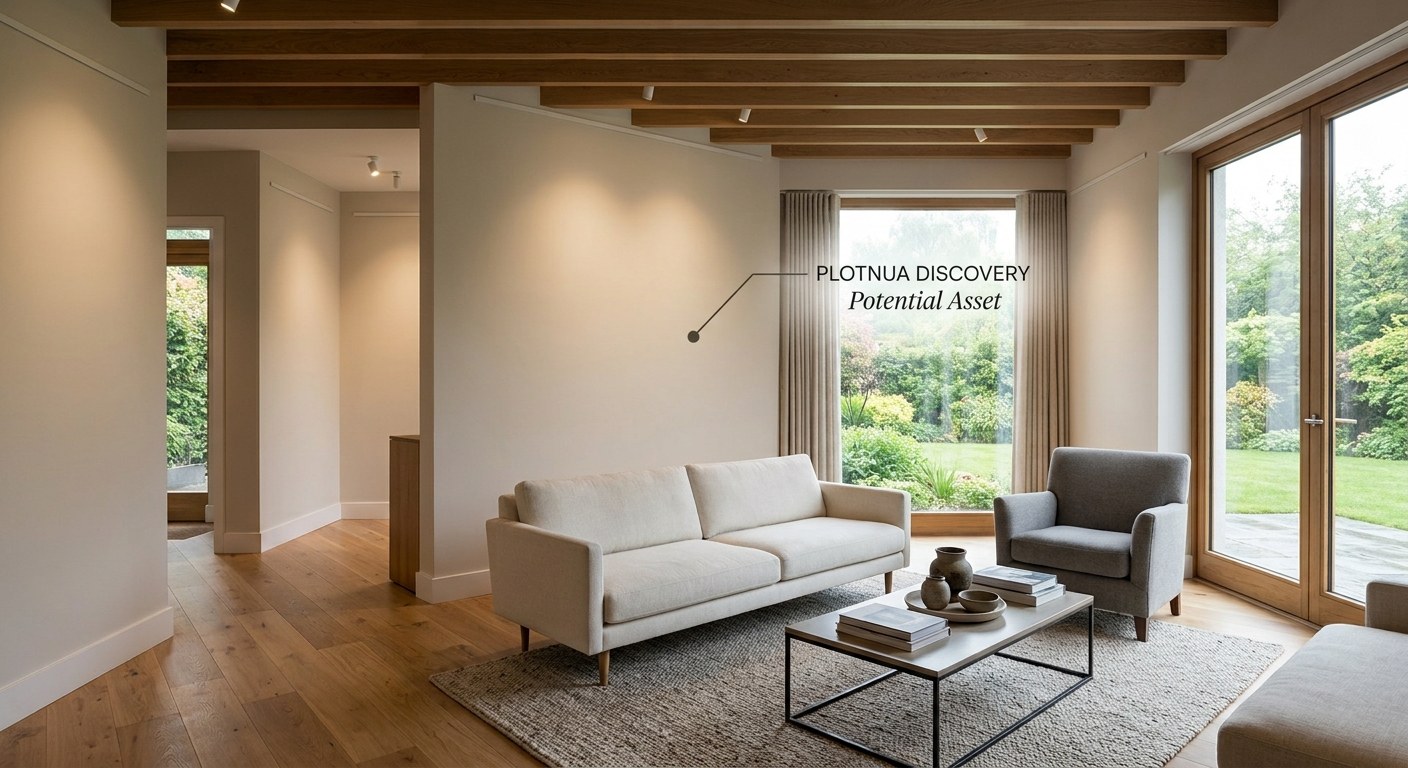
A wall, a floor, and a door that opens.
Three things to settle first.
- Custody Agree what is coming, and who is covering it. What work, how many pieces, what each is worth, and the condition it arrives in. Do not assume a home policy protects somebody else’s artwork.
- Your home Tell your insurer what you intend to do. The more routine or commercial the activity becomes, the more important it is to check. A Section 5 declaration gives a formal answer for €80, decided within four weeks.
- Money If money changes hands, it is income. Rent-a-Room Relief does not apply — that scheme is for letting a room as living accommodation. The artist remains the seller and takes the buyer’s payment; anything you receive is a separate agreed amount, and income in the normal way.
What to agree with the artist
Access and duration. When the artist can come, how they get in, and how long the arrangement runs. A season is a natural unit. Agree the notice either of you gives, and what happens to work still in the house when it ends.
An inventory, with values. What is coming, how many pieces, what each is worth, and the condition each arrives in. Photograph them on the day. This is the single most useful thing you can do, and it takes twenty minutes.
Photographs. Whether work may be photographed in your home, whether your rooms may appear in those images, and where the artist may use them.
Fee or share. Whether anything is being paid for the space, and whether you receive a share if a piece sells as a result of your involvement. Agree it in advance and write it down — one page, signed by both, costs nothing and prevents most disagreements.
Responsibility. Who insures the work, and what happens if something is damaged.
Insurance, custody and your home
The artist’s cover does not close the gap either. Visual Artists Ireland advises artists to hold their own public liability insurance for an exhibition even where the venue is insured — because if a visitor is injured by an artwork, that can be the artist’s responsibility rather than the venue’s. It also notes that most such policies do not cover work in transit. Public liability is about harm to people, not damage to the work.
Tell your own insurer first. Bringing somebody else’s property into your home, for money, is exactly the kind of change an insurer expects to hear about. Ask before anything arrives, not after.
Money, selling and the planning line
What you receive is income. A fee for the space, or a share when something sells, is income and is taxable in the normal way. Rent-a-Room Relief does not apply — Revenue’s scheme covers letting a room as residential accommodation, with a minimum letting period, and not for commercial purposes. There is no tax-free allowance here. If your non-PAYE income for the year reaches €5,000, Revenue treats you as a chargeable person and a different return applies.
Where the planning line sits. Planning permission is needed only where a change of use is material, and whether a change is material depends on the facts. Keeping a few pieces is a long way from running a sales business out of a dwelling. The more regular or commercial the activity becomes, the more important it is to check — and a Section 5 declaration is how you get a formal answer rather than an opinion. Nothing here is legal or tax advice, and the judgement is your local authority’s, not ours.
One thing worth knowing about the artist’s side. Under Revenue’s Artists’ Exemption, income from the sale of original artistic work — paintings and sculpture among the qualifying categories — can be exempt from Income Tax up to €50,000 a year, but only where Revenue has made a determination for that artist’s work. It is the artist’s relief, never the host’s.

The work exists already. What it lacks is a room.
Three people are better off.
- The artist. Somewhere for the work to be, and somewhere it can be seen. Wall space is the scarcest thing in an artist’s year.
- You. A room with something in it worth looking at, and possibly something for the space.
- Whoever buys it. Work seen beside a sofa rather than under gallery lighting — the hardest thing to picture, and the easiest thing to judge.
Nothing has to happen twice. But the artist now knows your wall.
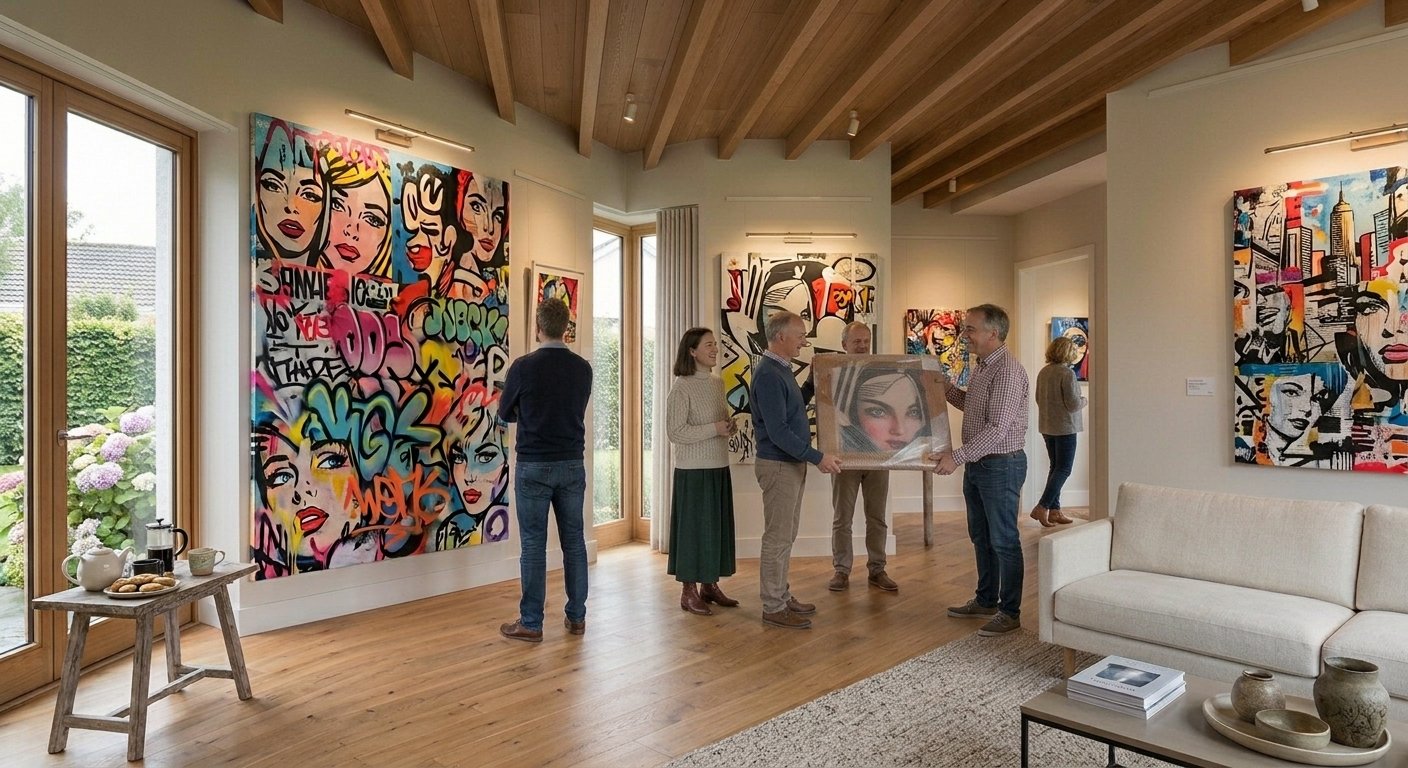
A work leaves with somebody who saw it in a real room.
What if PlotNua could help you find each other?
All of this can be arranged today between two people who have already met. Finding each other is the difficult part.
Starting with an Eircode, a future version of PlotNua could work out what space a property has, ask how involved you would want to be, and show whether an artist nearby needs exactly that. If both sides were interested, PlotNua could help make an introduction.
This matching service is not live yet.