Skip to main content Back
Chat on WhatsApp
Search PlotNua
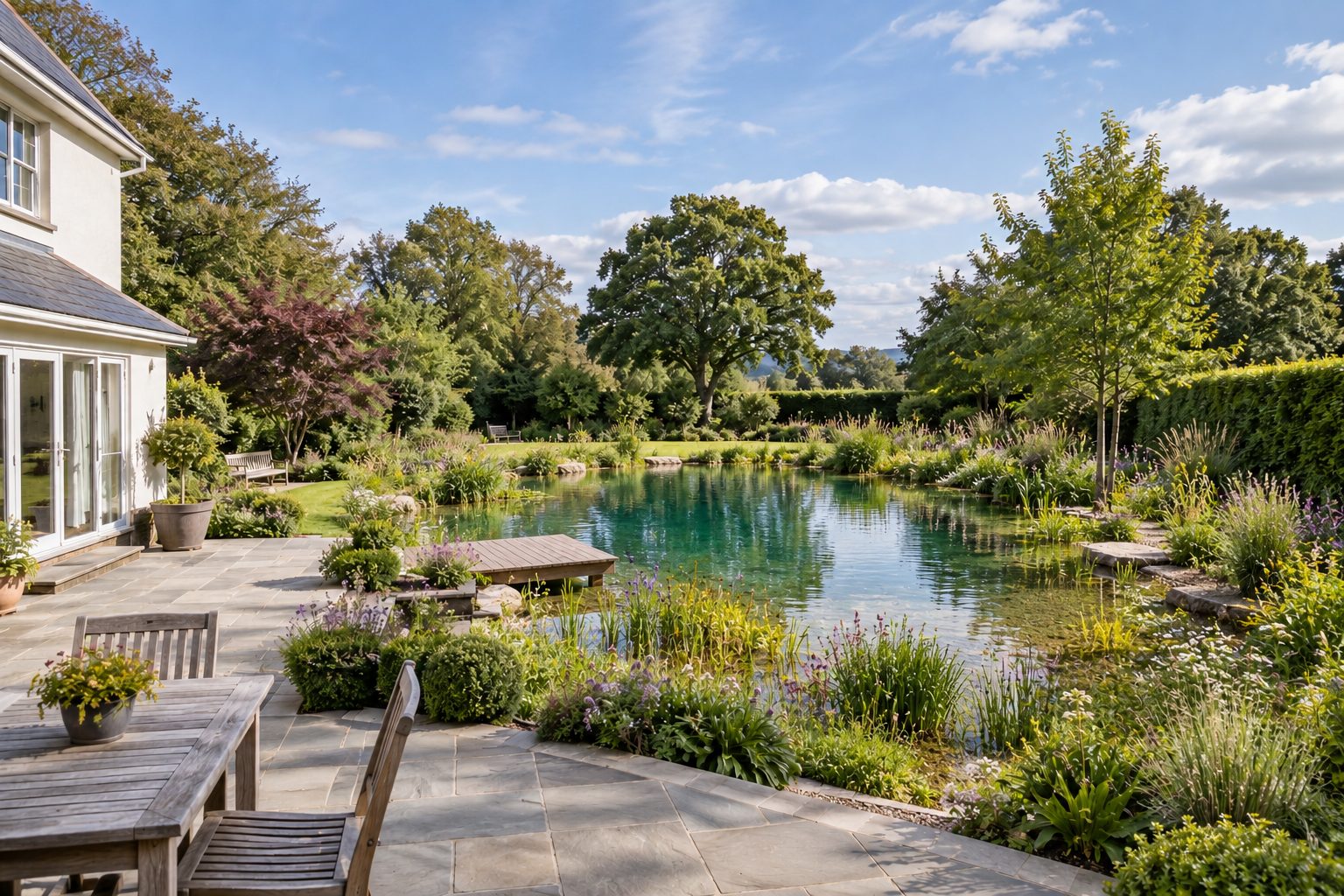
A natural swimming pond in a sunny Irish back garden: clear water edged with reeds, irises and grasses, a timber jetty, stone steps, mature trees and a white house with a stone patio.
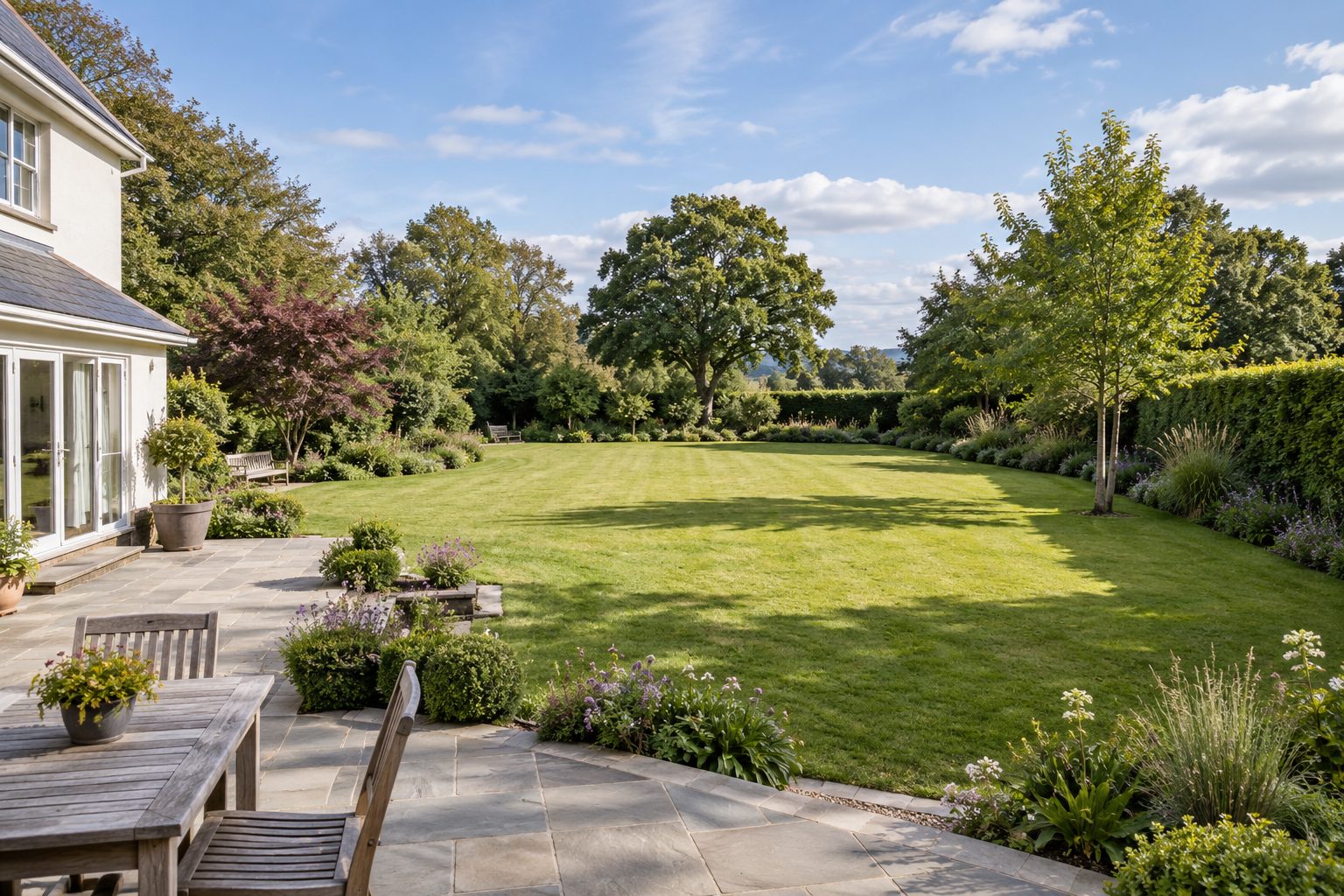
Before: the same garden as it is, with a stone patio and a long open lawn.

Use the left and right arrow keys to move the divider. Home shows the garden as it could be; End shows the garden before.

Illustrative AI-generated visualisation. Not an actual installation.

A PlotNua Discovery

The Natural Swimming Garden

What if you could go wild swimming without leaving home?

A natural swimming pond is a carefully designed part of the garden, with plants and biological filtration helping to maintain the water without conventional chlorine treatment.

Illustrative AI-generated visualisation. Not an actual installation.

The opportunity

The opportunity

Your own swim, at the end of the garden.

Picture a summer evening. You walk down the garden, past the planting, and step into clear water edged with reeds and irises. No changing rooms, no car park, no journey to the coast. Just your own garden.

It isn’t a fantasy. Natural swimming pools have been designed and built in private gardens in Ireland, including in Co. Louth, north Cork and Co. Laois.

From lawn to swimming pond

It starts with the garden you already have.

An open lawn, planting at the edges, and room to think differently about both.

An ordinary Irish back garden before any change: a stone patio with a timber table, a long open lawn, mature trees and a tall hedge, annotated by PlotNua with three observations.

AI-generated illustration

  • 01 · Available groundA generous stretch of lawn offers space to explore a natural swimming pond.
  • 02 · Existing landscapeMature planting and garden boundaries could help integrate a swimming environment.
  • 03 · Practical feasibilityGround conditions, excavation access, water supply and planning would determine whether the idea could proceed.

An illustration of an imagined garden. PlotNua has not assessed the suitability of this or any real property.

The problem

A conventional pool changes a garden.

For most of us, a swimming pool means a conventional tiled pool. It is one answer, not the only one.

  • Water that is treatedA conventional pool is usually kept clean with a chemical sanitiser.
  • A hard edgeTiles and paving often take the place of planting.
  • Equipment to runPumps and filters, and often heating. Many natural pools use a pump too; the difference is how the water is cleaned.
  • Questions asked lateSpace, ground, planning and safety are easier to answer before anything is designed.

The possibility

Water that is cleaned by the garden itself.

Biological filtration, a planted regeneration area and gentle circulation.

What a natural swimming pond actually is

Designed for swimming from the start.

A natural swimming pool is cleaned by biological filtration (plants, a biological filter, or both) instead of chlorine.

It isn’t an ordinary garden pond that someone decided to swim in. Most have two connected parts: a deeper area for swimming, and a shallower, planted area where the water is cleaned. Many also use a pump and filter to keep the water moving.

That’s what makes it different from a pond made for fish or for looking at: its depth, its filtration and the way the water is managed are all planned around people swimming in it. It still needs looking after. Plants are cut back, debris is cleared, and the water is checked through the season.

Diagram, part 1: how a natural swimming garden works. Water moves between a deeper swimming zone and a shallow planted regeneration zone, either naturally or with a small pump; plants and microorganisms clean it; the result is clear water in the swimming zone. The full text is given below the diagram. Diagram, part 2: three ways to bring natural swimming into your garden: a plant-led natural swimming pond, a hybrid natural swimming pond, and a compact biologically filtered swimming pool. The three approaches are described in section 04.

How a natural swimming garden works.

A simplified illustration: clear water still needs regular water-quality testing, and maintenance varies with the design.

AI-generated illustration. Swipe sideways to read the whole diagram.

Accessible versionRead the diagram as text

How a natural swimming garden works. A natural swimming pond uses plants, natural microorganisms and careful design to help keep the water clean, clear and healthy without conventional chlorine treatment.

1 · Water flows naturally. Water moves between the swimming zone and the planted regeneration zone, either naturally or with a small pump depending on the design.

2 · Plants and microorganisms clean the water. Aquatic and marginal plants take up excess nutrients, while beneficial bacteria living on plant roots and in gravel help break them down.

3 · Clean, clear water for swimming. The result is clean, clear water in the swimming zone, without the need for conventional chlorine or chemical treatment.

Planted regeneration zone: a shallow, planted area where nature does the work. Swimming zone: a deeper area for swimming, typically 1.5–2.0 metres.

Three ways to bring natural swimming into your garden. Designs vary in appearance, size, maintenance and cost. The three common approaches are described in section 04 below.

Important: natural swimming ponds can be designed to work with nature, without conventional chlorine treatment. Maintenance requirements vary between designs, and all systems require some care. The exact design, cost and ongoing maintenance depend on the site, the installer and your individual circumstances.


Diagram: how a natural swimming garden works, shown full size. The full text is given on the page under Read the diagram as text.
SWIMMING AREAdeeper, open water REGENERATION AREAshallow, planted biological filtration in planted gravel low underwater wall water circulates between the two, in many designs helped by a pump 1 2 3 4
  1. Swimming area: deeper, open water
  2. Regeneration area: shallow and planted
  3. Biological filtration: plants and microorganisms in planted gravel
  4. Water circulation: between the two areas, in many designs helped by a pump
Illustrative cross-section by PlotNua, drawn from the description on this page. Not to scale, and not a design for your garden.
Three natural swimming approaches

Three ways to bring natural swimming into a garden.

They differ in how much the planting does, how much equipment is involved and how the water looks. The first is the one this Discovery is about.

The primary approach

Plant-led natural swimming pond

Plants, microorganisms and planted regeneration areas provide biological filtration. Some designs use little mechanical equipment.

  • A planted regeneration area sits beside the swimming water and does much of the cleaning.
  • Some plant-led designs can have relatively modest maintenance needs: seasonal plant care, clearing debris and regular checks on the water.
  • It needs the most room of the three, which is why it suits a generous garden.

Hybrid natural swimming pond

Combines planted regeneration areas with pumps or additional biological filtration.

  • The north Cork and Co. Laois examples both combine planting with a pump.
  • Care includes the planting and routine checks on any equipment.

Compact biologically filtered pool

Uses engineered biological filtration, sometimes with little visible aquatic planting. Compact, biologically filtered pools exist elsewhere in Europe, from about 25 m² of water. They look more like a conventional pool than a pond, and we haven’t found an installer offering them in Ireland.

Current installation availability in the Republic of Ireland has not been verified.

All three rely on biological filtration rather than conventional chlorine treatment. Maintenance varies between designs, and every one still needs some care and regular checks on the water.

Looking across a natural swimming pond towards a white house: still turquoise water over smooth stones, water lilies and reeds in the shallows, a timber deck with a sun lounger, and wildflowers in the foreground.

A swim before breakfast. A cool-off on a summer evening. Your garden, from the water.

AI-generated illustration

What exists today

It’s already happening in Ireland

Three Irish gardens built around the water.

In Ireland it’s a bespoke landscape project, usually designed by a landscape architect or garden designer and built by a landscape contractor.

Co. Louth

Near Carlingford

A garden built around the water

Near Carlingford, a contemporary garden was created around a natural swimming pool. The garden was designed by Andrew Dunne of Andrew Christopher Garden Design, and built by Silverstream Landscapes.

In 2020 an Irish natural swimming pool garden won an award at the ALCI Landscape Awards: this project earned Silverstream Landscapes the ALCI’s Landscape Contractor of the Year award. The designer describes the project as almost two years in the making, including a detailed planning application.

North Cork

Filled by the rain

A pond fed from the roofs

A natural swimming pool in rural north Cork features in the portfolio of Cathal O’Meara Landscape Architects. Its water is harvested from the roofs of nearby outbuildings. A shallow planted zone helps clean the water and is warmed by the sun. A second natural pool in the practice’s portfolio is fed from a well on the site.

Co. Laois

A family’s own pond

A self-built family pool

Near Durrow, artist and permaculturist Marc Rome built a natural pool for his own family, as reported by The Irish Times in 2022. It’s about 16 metres by 6 metres and holds around 117,000 litres, with a reed bed and an iris zone working alongside a simple garden pump.

Projects are described from published sources. Their inclusion doesn’t mean the designers or builders currently offer natural swimming pools, or that they are connected with PlotNua. No project photographs are shown.

The practicalities

Before anything is dug.

What the rules and safety require, kept apart from design guidance.

The space it needs 40 square metres of pond, for around 20 m² of swimming water

For example, a pond of roughly 8 m by 5 m, before you add a place to sit, a path or a deck. Space guidance from Homebuilding & Renovating (UK, 2022). Requirements vary with the design.

An idea for a generous garden.

Planted designs need space: about 40 m² of pond for around 20 m² of swimming water, before paths and terraces.

So the first question isn’t really “could I have one?” It’s “where would it go?” Think about:

  1. the flattest, sunniest part of the garden;
  2. how a digger would get in;
  3. where the water will come from;
  4. how the pond will sit beside everything else you use the garden for.
Before you go further

The practical side, early.

Beyond the pond itself, a project may involve excavation, a liner, filtration equipment, pumps, planting and landscaping. These are the practical considerations worth understanding early.

What the rules and safety require

Planning, safety, water and electrics, each with its source below.

Planning

Expect a planning conversation

A natural swimming pond should be treated as a project likely to require planning permission. The planning exemptions for ordinary garden ponds should not be assumed to apply to swimming ponds. Check with your local planning authority before proceeding. A Section 5 declaration can provide a formal determination on whether proposed works are exempt.

Children

Supervision comes first

Children can drown in a few centimetres of water. Fences and covers reduce the risk but are no substitute for supervision.

Water quality

Clear water still needs checking

Ireland does not have a specific water-quality standard for private natural swimming pools. Biological filtration still requires maintenance and water-quality monitoring. Owners should agree a suitable testing and maintenance programme with their pool designer and an appropriate testing provider.

Water supply and drainage

A lot of water, planned for

Natural swimming ponds can require substantial quantities of water. One documented Irish family pool holds approximately 117,000 litres. Restrictions on public water use can affect filling pools and ponds. Water supply, overflow and any eventual emptying should be considered during design and agreed with the relevant authorities or service providers where required.

Electrics

Pumps and lighting

Where pumps, filtration equipment or lighting require electrical installation work, use a Registered Electrical Contractor and obtain the appropriate completion certification.

Insurance

Tell your insurer

Tell your home insurer before you build one, and check how your policy treats it.

Design guidance

Questions for you and your designer. The answers vary with every garden.

Garden sizeIs there room?

Planted designs need space: about 40 m² of pond for around 20 m² of swimming water, before paths and terraces. Traditional planted swimming ponds generally suit larger gardens; requirements vary with the design.

Ground conditionsWhat lies beneath the lawn

The ground shapes the design. The award-winning Co. Louth pool was built on a site with a very high water table. A designer will want to understand your soil, levels and water table before anything is dug.

Excavation accessHow a digger would get in

A swimming pond means excavation, and machinery has to reach the garden. Side access, gates and the route through the garden all matter, and so does where the excavated soil will go.

MaintenanceWhat looking after it involves

Plants are cut back, debris is cleared, and the water is checked through the season. Some plant-led designs can have relatively modest maintenance needs, but every design needs some care, and any pumps or filters need routine checks.

What does it cost?

A substantial landscape investment.

We haven’t found published Irish prices for natural swimming pools. Costs depend on the site and design, so ask for a quote.

We’d rather tell you that than print a figure we can’t stand behind. What we can say is that a natural swimming pond is a substantial landscape investment. A designer can help you understand what your garden would involve before anything is dug.

  • 01The size of the pond
  • 02Ground conditions
  • 03Access for machinery
  • 04The filtration design
  • 05The landscaping around it
  • 06Professional design and installation
SourcesWhere this information comes from
  1. Andrew Christopher Garden Design, The Natural Swimming Garden.
  2. Horticulture Connected, The 2020 ALCI Landscape Awards winners announced (10 March 2020).
  3. Cathal O’Meara Landscape Architects, Natural swimming pool and Private garden swimming pool.
  4. The Irish Times, In the swim: how one family created their own natural pool (16 July 2022).
  5. Homebuilding & Renovating (UK), Natural swimming pools (May 2022): space guidance.
  6. BIOTOP, FAQ and compact reference project: compact systems abroad.
  7. Planning and Development Regulations 2001 (S.I. No. 600 of 2001, as amended), Irish Statute Book.
  8. Health Protection Surveillance Centre and Water Safety Ireland: advice on water around the home.
  9. Commission for Regulation of Utilities, Electrical works in your home.
  10. Uisce Éireann, Water Conservation Hub.

Last checked 26 October 2026. PlotNua is an independent discovery platform and does not recommend or endorse any provider mentioned. The images on this page are AI-generated illustrations, not photographs of the projects described.

The homeowner decision

Two ways to take the next step.

Explore yourself

Read the Irish projects, the practical guide and the sources, then talk to a designer directly.

Let PlotNua do the homework

Start a free conversation with PlotNua. Tell us about your garden and we’ll talk it through with you, using what PlotNua has researched.

Free for homeowners.

PlotNua doesn’t design or build swimming ponds, and nothing is booked by starting a conversation.

Your next step

Start with your garden, not with a pool.

Talk to a landscape architect or garden designer about your garden first. It helps to bring:

  • a rough plan or photos of the garden, and any slopes or levels;
  • the space you think you could give to the pond and its surroundings;
  • where water would come from: mains, a well or collected rainwater;
  • who will use it, including any young children;
  • anything you’ve already heard from your local planning authority.
Landscape architects

Irish Landscape Institute

Directories of landscape architecture practices and individual landscape architects.

Garden designers

Garden and Landscape Designers Association

A directory of member garden designers.

Landscape contractors

Association of Landscape Contractors of Ireland

A search for accredited landscape contractors by service and county.

These are professional directories, provided for information. Listing doesn’t mean a member designs or builds natural swimming pools, and PlotNua has no arrangement with these organisations. Ask any designer about their experience with swimming ponds.